
How to grow early potatoes successfully: the market gardener's guide
Essay article


Why choose early potatoes?
The potato is not necessarily the most obvious vegetable to cultivate in bio-intensive market gardening, especially on small plots. Yet by choosing the early variety, it is possible to achieve decent yields per square meter while respecting space constraints and avoiding mechanization.
For years, we set it aside in favor of crops better suited to the greenhouse — lettuces, tomatoes. What changed our perspective was the early harvest: planted in January or February, early potatoes are harvested as soon as May and free up the bed for other crops.
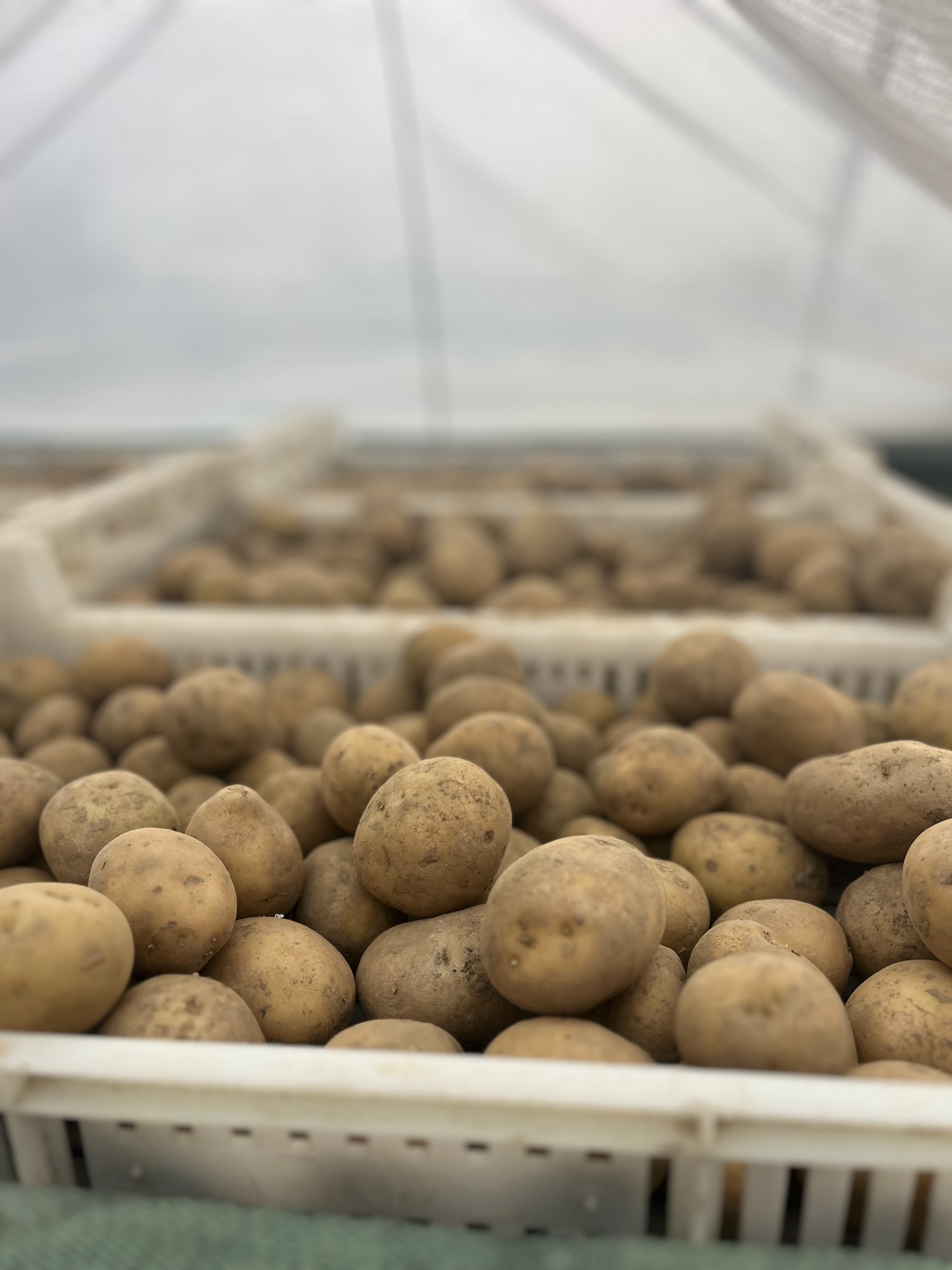
On 5,000 m² of production, you would need roughly 2,000 m² to meet demand for standard potatoes. Without mechanization, this quickly becomes unprofitable. The early variety allows you to maximize returns on a reduced area over a short timeframe, with higher market value per kilo.
Key stages of cultivation
Success with early potatoes depends on a few simple but essential steps. A well-kept calendar and some advance planning make all the difference.
Pre-germination
We purchase our seed potatoes in January and place them at 15–16 °C in a bright greenhouse to stimulate sprout emergence. Light is essential: it ensures short, robust sprouts that are much easier to plant without breaking.
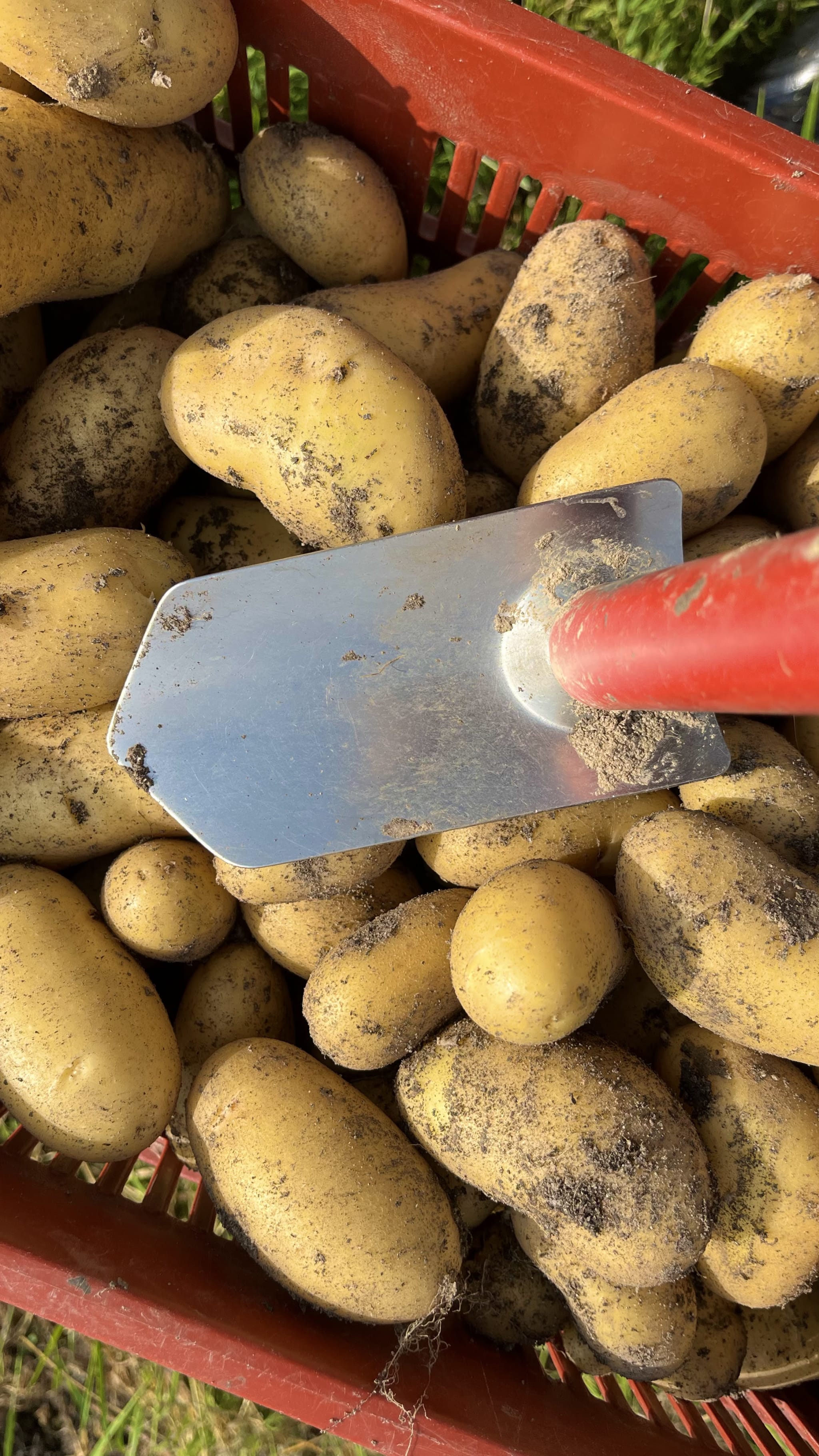
Pre-germination takes place in a bright greenhouse, at 15–16 °C. Short, well-green sprouts are a sign that light has done its work. A spindly, etiolated sprout will be fragile at planting.
Allow three to four weeks between pre-germination and planting.
Planting under Nantes-style tunnel
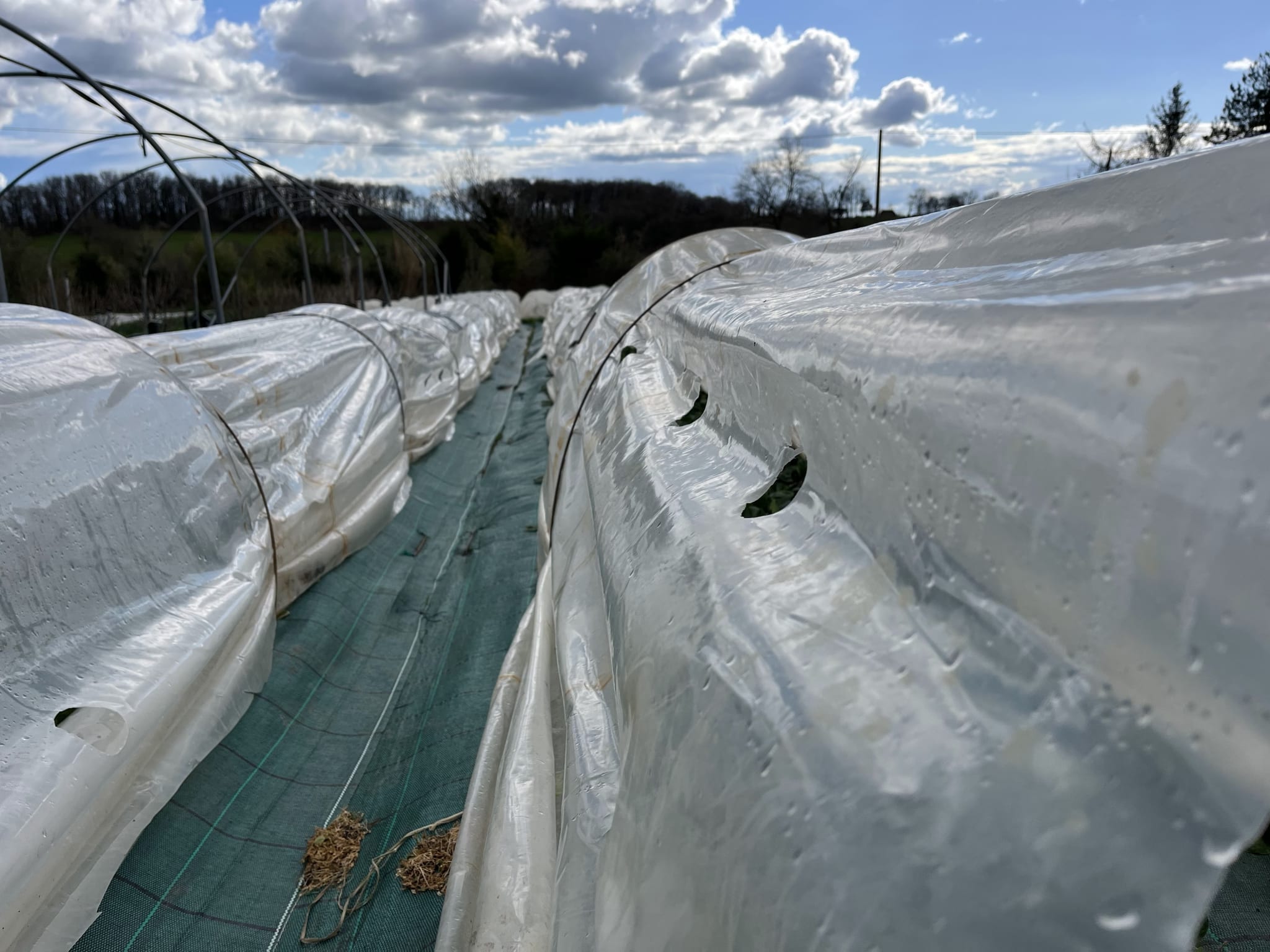
Potatoes are planted under "Formula 1" tunnels, covered with climate netting to protect them from cold and frost. The plastic used is thick — 200 microns — and perforated with holes to evacuate excess heat during the day.
Plants are laid directly on pre-perforated woven fabric, which eliminates the need for hilling and minimizes soil work. Recommended densities: 30 cm between rows, 25 cm within rows.
Irrigation and monitoring
Drip irrigation under the mulch ensures regular water supply. Irrigation becomes critical from late March onward, especially during flowering: this is when tuber growth is determined.
The strengths of this system
Several points speak in favor of this approach for a bio-intensive market gardener on a small plot.
Rapid plot turnover. Early harvest in May frees up space for spring or summer crops — cabbage, leeks, zucchini. The bed is not tied up for long.
Reduced disease pressure. Early in the season, natural cold limits the appearance of blight and insect pests. You avoid the periods most prone to foliar diseases.
Accessible variety choice. We work mainly with early varieties like Charlotte or Jeannette, available from most local suppliers.
Some practical guidelines
Here are the key points to keep in mind throughout the season.
- Plant starting in January or February to maximize earliness.
- Do not open tunnels too early: thermal protection remains useful until March, or even early April depending on the year.
- Monitor irrigation as flowering approaches — this is the most critical time for tuber growth.
- Harvest progressively and keep the covering in place to avoid damaging tubers during extraction.
Early potato cultivation requires some advance planning, especially for pre-germination. But once in place, it is relatively straightforward to manage. For a market gardener on a small plot, it is a concrete way to diversify the production calendar without tying up space long-term.
-
Successful autumn radishes: practical guide and tips
From bed preparation to harvest, every step counts to grow crunchy, healthy and flavorful autumn radishes from September onward.
-
Winter rest in market gardening: an essential strategy for the long haul
Rather than enduring winter, make it an ally: a time for recovery, review and anticipation, essential for the sustainability of a micro-farm.
-
Seedling greenhouse: 5 essential tips to face the cold and succeed with your seedlings
In the heart of winter, a seedling greenhouse may seem at a standstill. Yet it is at this time that spring success is largely prepared…