SANVENSA · AVEYRON · SINCE 2012

Bio-intensive microfarm,
in Aveyron since 2012.

Les Jardins de la Valette, in Sanvensa: more than 50 organic vegetables on less than 5,000 m², and a real desire to share what we have learned.

01 · The farm's story

A market-gardening microfarm working bio-intensively since 2012.

"Les Jardins de la Valette was founded in 2012, on my grandparents' land in a small French village. Although I don't come from a family of market gardeners, my grandparents were farmers."

After studying electrical engineering, I felt the need to come back to something more tangible, closer to the soil. A horticulture course, several years travelling between Australia and New Zealand, the discovery of permaculture and Eliot Coleman, then a pivotal internship at Les Jardins de la Grelinette with Maud-Hélène Desroches and JM Fortier. Once back in France, a single idea remained: starting my own farm. Done since 2012.

In 2018, once the young farmer grant period was complete and the structure viable, the farm moved a few kilometres away to become Les Jardins de la Valette V2 — Ségala soil, much better suited to market gardening. Today, the farm is perfectly balanced: two weekly markets, one full-time employee, one seasonal worker through peak season.

· Sylvain Couderc

"This is what allows us to achieve, on less than 5,000 m², what many believe to be impossible."

  1. 2010

    Internship at Les Jardins de la Grelinette

    A pivotal internship with Maud-Hélène Desroches and Jean-Martin Fortier in Quebec, before the farm gained its international reputation. The professional vision became clear: starting his own bio-intensive microfarm in France.

  2. 2012

    Founding Les Jardins de la Valette

    Sylvain set up on his grandparents' land, in a small village in the Aveyron. Holding a BPREA (French farming diploma), he fully embraced the bio-intensive model. That same year, JM Fortier published his first book — a natural support in his technical choices.

  3. 2018

    Second farm · Les Jardins de la Valette V2

    Once the young farmer grant period was complete and the market garden viable, the farm moved a few kilometres away — leaving behind a clay-limestone soil with limited water resources for richer Ségala land, far better suited to market gardening.

  4. 2020

    First in-person training at Permaterra

    Sylvain launched his first bio-intensive market gardening course, taught in person at Permaterra. Passing on knowledge became a major axis of the project, alongside vegetable production.

  5. 2022

    Creation of the training organisation

    We made teaching official with the creation of our own training body. The course catalogue grew steadily, drawing students from across France and beyond.

  6. 2025

    Launch of Spidplant

    We launched Spidplant, a hand-tool brand designed for the microfarm: soil blockers and precision seeders, developed at Les Jardins de la Valette to make daily work easier for small-scale market gardeners.

-5,000
cultivated by hand, without a tractor
126beds
permanent beds, 75 cm × 20 m, on a 7-year rotation
+90,000
of vegetables produced every year
02 · The team

Together, we go further.

"The work done online — YouTube videos, distance learning — couldn't be done without help. As a market gardener, I'm mainly focused on production. Without Nancy and Lise, none of this would have come to life." — Sylvain

S

Sylvain Couderc

Founder of Les Jardins de la Valette, market gardener and trainer

"The work done online — YouTube videos, distance learning — couldn't be done without help. As a market gardener, I'm mainly focused on production. Without Nancy and Lise, the seasonal workers who come and go through the years, and everyone who has supported me along the way, none of this would have come to life."

Market gardening
N

Nancy Benazeth

Training assistant, interpreter, translator and disability liaison

From the very beginning of the market-gardening adventure and the work of passing on knowledge, Nancy has always been at my side. Her support and commitment have allowed me to move forward serenely with my projects. She plays an essential role within our training organisation, bringing her energy, her ideas and her expertise.

Training
L

Lise Rouquet

Communications, video editing, development

Lise joined the team as communications manager to highlight the work and initiatives of the farm. With solid experience in digital and project management, she brings her expertise to the farm and the courses. She actively contributes to strengthening the visibility and reach of the project.

Communications
F

Florian Simian

Co-founder of Spidplant, aeronautical maintenance technician

Florian and Sylvain have been friends for many years. One a market gardener, the other an aeronautical maintenance technician: this dual expertise gave rise to Spidplant and the Spidmot, a new soil-blocking system designed for small-scale market gardening. Florian brings technical rigour, robustness and practicality; Les Jardins de la Valette serve as a full-scale testing ground.

See our tools
Spidplant
C

Célia

Seasonal worker

Célia is with us for her second season, out in the field. Harvesting, planting, bed maintenance: all the essential gestures that keep the farm running day in, day out.

Market gardening
C

Chloé

Seasonal worker

Chloé lends a hand through the peak season. You may spot her at the Limogne market, or out on harvest days. Her contribution is invaluable for absorbing the busier weeks.

Market gardening
03 · The method

Bio-intensive market gardening, in a few words.

Bio-intensive market gardening on small surfaces is a method inspired by 19th-century Parisian growers. The core idea: grow on a reduced surface while achieving high yields. Without a tractor, with plenty of compost, and a rigorous crop plan that fills every square metre throughout the season.

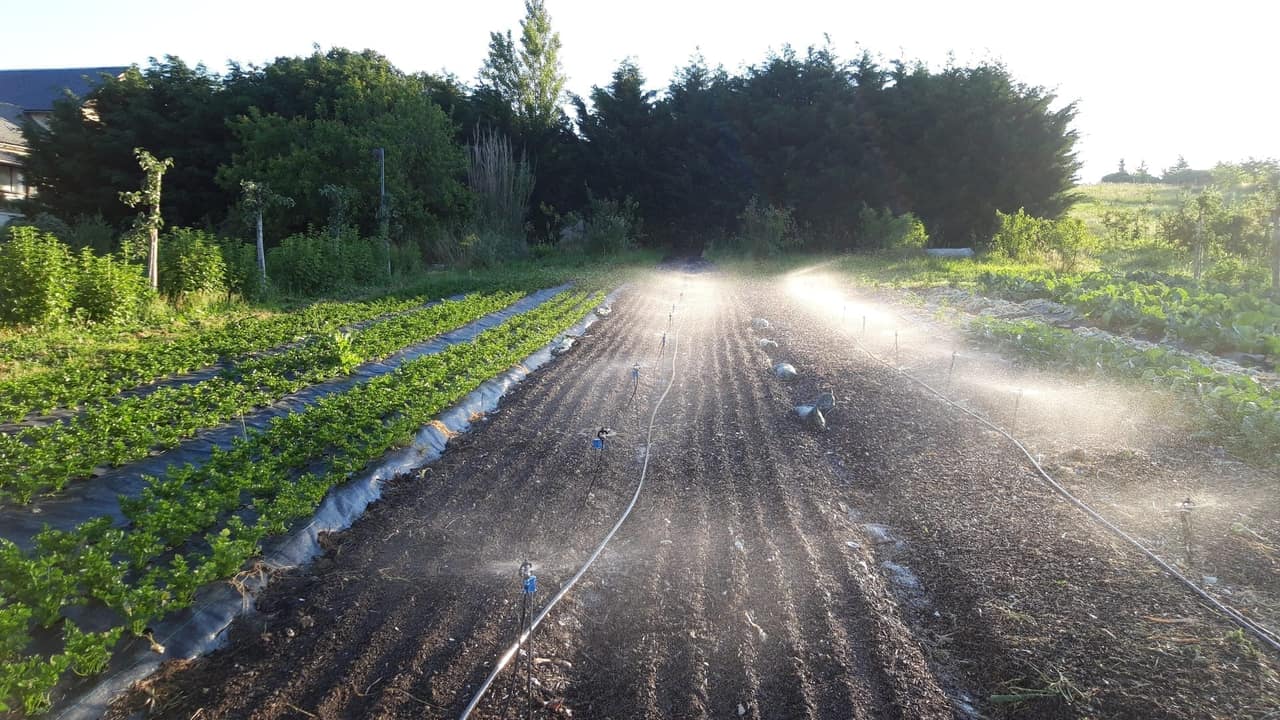
Overview of the bio-intensive vegetable garden at Les Jardins de la Valette in summer, with irrigation and mulching

A garden laid out with care

To make the most of the season, the garden is divided into identical blocks on a 7-year rotation. Each block is split into permanent beds 75 cm wide, for a total of 126 beds of 20 metres — just under 5,000 m² at Les Jardins de la Valette.

Soil work is carried out only at the surface, never deeper than 8 cm, to protect soil biology: earthworms take care of the rest. Because the beds are permanent, we never walk on them, which preserves their structure. A massive supply of organic matter — up to 100 tonnes of compost per hectare — sustains and improves the long-term fertility of our soils.

01

Inspired by the 19th century

Growing on a small surface with high yields, in the spirit of 19th-century Parisian market gardeners — without a tractor, with plenty of compost and a rigorous crop plan that fills every square metre throughout the season.

02

Permanent beds

The garden is divided into identical blocks on a 7-year rotation, themselves split into permanent beds of 75 cm × 20 m. We never walk on them, in order to preserve soil structure.

03

Surface-level soil work

Never deeper than 8 cm, to protect soil biology — earthworms take care of the rest. A rotary harrow on a two-wheel tractor (BCS) is our only mechanised tool.

04

Compost in abundance

Up to 100 tonnes per hectare. A massive supply of organic matter sustains and improves the long-term fertility of our soils.

05

Everything else by hand

Hoeing, planting, harvesting: by hand, with highly efficient hand tools developed over recent years. Constant thinking to streamline every gesture.

06

Economically viable

More than €90,000 of vegetables on less than 5,000 m², 120 families fed every week, 8 weeks of holiday and a 35-hour week. The garden is not meant to grow bigger.

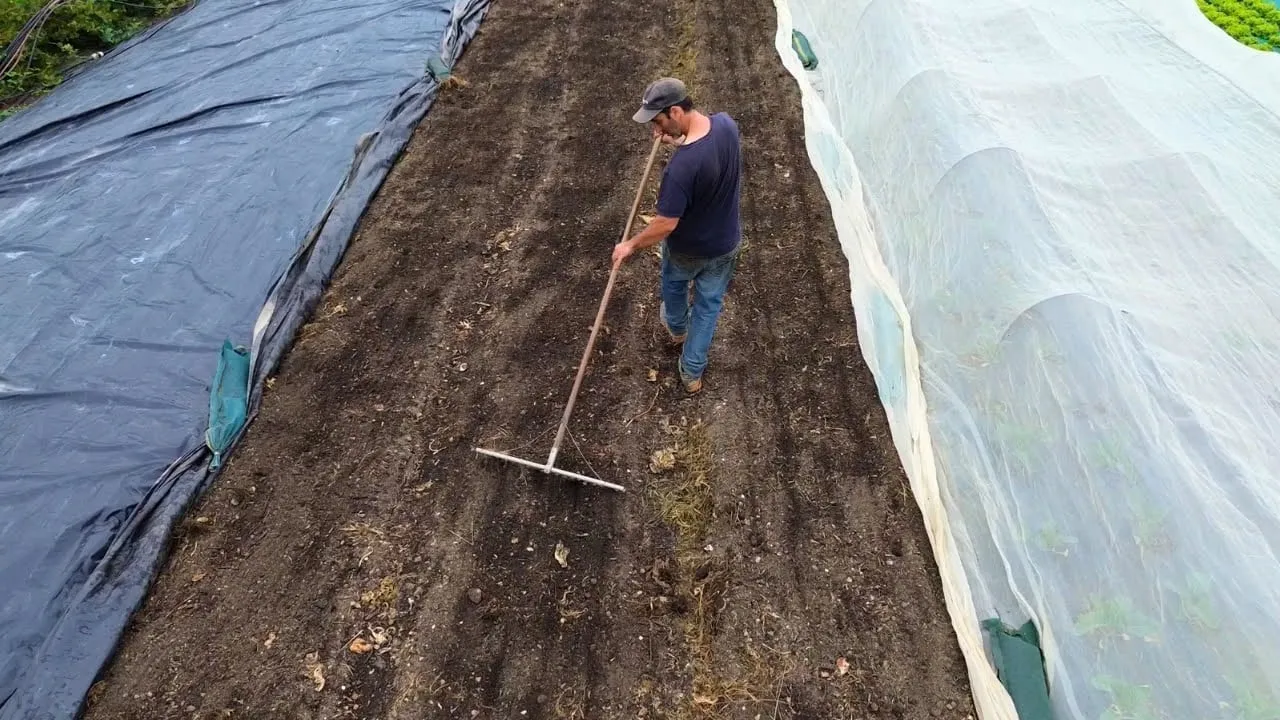
Soil preparation under glass at Les Jardins de la Valette, by hand with a broadfork

Manual doesn't mean archaic

To prepare the surface, we use a rotary harrow mounted on a two-wheel tractor: it's our only mechanised tool. Everything else is done by hand — hoeing, planting, harvesting.

When you say "manual work", people often picture something slow and painful. In reality, many highly efficient hand tools have been developed in recent years. Constant thinking and close attention go into every daily task, with the aim of refining and streamlining each gesture over time.

This system, brought back into the spotlight by Eliot Coleman and Jean-Martin Fortier, co-founder of Les Jardins de la Grelinette, is an environmentally sound model that does not lose sight of profitability. Since 2012, we have produced more than €90,000 of vegetables on less than 5,000 m², working 35 hours a week and taking 8 weeks of holiday.

We feed around 120 families every week. Our garden won't grow any bigger: it is more than enough. The surface has stayed the same since the start, but our production rises year after year.

Frequently asked questions

Everything you might want to know about the farm.

Where is the Les Jardins de la Valette microfarm located?

The current farm is in Sanvensa, in the Aveyron department (12200), in the heart of the Ségala region of southwest France, near Villefranche-de-Rouergue. The microfarm was founded in 2012 in Sainte-Croix (12260), on the family land, then moved a few kilometres away in 2018 to richer Ségala land, far better suited to market gardening.

Can the farm be visited?

Visits are reserved for school groups and BPREA (French farming diploma) students, by prior arrangement.

How big is the farm?

The farm covers around 3 hectares in total, including less than 5,000 m² cultivated by hand without a tractor. The production area has 126 permanent beds of 75 cm × 20 m, on a 7-year rotation, including greenhouses and walking paths.

Is the farm certified organic?

Yes. Les Jardins de la Valette has been farming organically since 2012, practising bio-intensive market gardening on living soil, inspired by 19th-century Parisian growers and brought back into the spotlight by Eliot Coleman and Jean-Martin Fortier.

Who is on the team at Les Jardins de la Valette?

The team brings together Sylvain Couderc (founder, market gardener and trainer), Nancy Benazeth (training assistant and disability liaison), Lise Rouquet (communications and development), Florian Simian (co-founder of Spidplant), and seasonal workers during peak season.