
Tomato leaf removal: an essential gesture for healthy and productive plants
Tomato leaf removal is an essential step in crop management, especially in greenhouses. It involves progressively removing leaves from the base of the plants.


Tomato leaf removal is an essential step in crop management, especially in greenhouses. It involves progressively removing leaves from the base of the plants to promote airflow, accelerate ripening and make harvesting easier. This article looks back at the when, how and why of this practice, the way we apply it on our farm.
If you grow tomatoes, you have probably already asked yourself: should you remove leaves, and if so, which ones? Leaf removal is a common but sometimes misunderstood practice. It does not mean removing leaves “at random” or only those that look damaged, but rather supporting the plant in its development.
On our farm, our grafted tomatoes trained in V under greenhouse are pruned regularly from the start of summer. By mid-August, the plants are already well aerated, and this care will allow them to keep producing until the end of October.
What is tomato leaf removal?
Leaf removal involves taking off the leaves located at the base of the plant, gradually working upward. This operation must be reasoned: a tomato needs its foliage to carry out photosynthesis and feed its fruits. That is why we always make sure to keep at least fifteen active leaves per plant.
A leaf corresponds to a set of leaflets: do not be misled by the fineness of the foliage, every leaf truly counts in the plant’s life cycle.
The technical gesture
Always work in dry weather, so that wounds heal quickly and disease risks are reduced.
- Work from bottom to top, never randomly across the plant.
- The ideal gesture is done by hand, snapping the leaf with a small back-and-forth movement.
- Pruners or knives should remain exceptional, as they can transmit diseases if not disinfected at every use.
Once the work is done, it is essential to collect all the cut leaves and sweep the aisles. Residues left on the ground retain moisture and encourage disease.
Why remove tomato leaves?
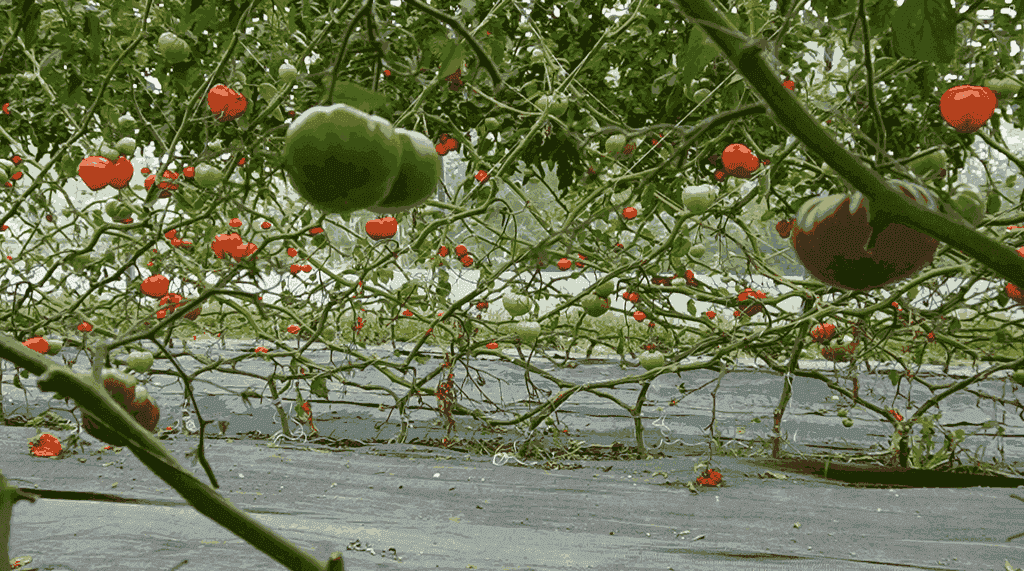
Removing leaves first improves air circulation around the plants. The greenhouse dries more quickly after morning dew, which limits pressure from blight and botrytis.
It also brings more direct light onto the trusses, which speeds up ripening. And harvesting becomes faster: fruits are visible, accessible, with no need to push aside the foliage.
Conclusion
Tomato leaf removal is a simple but essential practice, contributing as much to plant health as to the quality and earliness of harvests. For us, this technique allows us to support our tomatoes through to the end of October in good conditions.
To see concretely how we proceed, find our complete demonstration on video.
-

How to grow early potatoes successfully: the market gardener's guide
Essay article
-
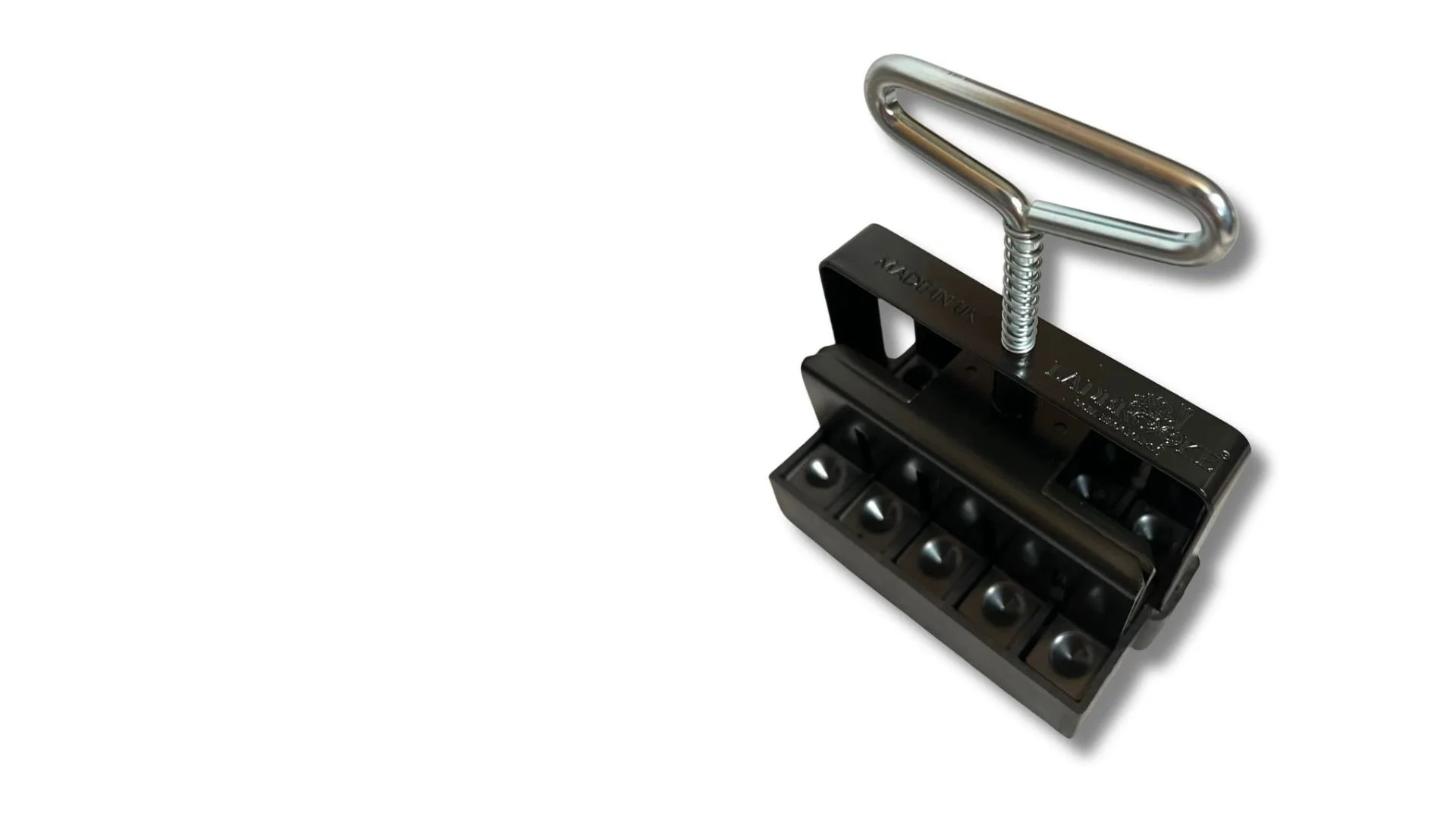
How to use the Micromotte 20 Ladbrooks for successful nightshades?
Long overlooked, the micro-soil-block maker is a remarkably effective tool to start hundreds of early tomatoes, peppers and eggplants.
-
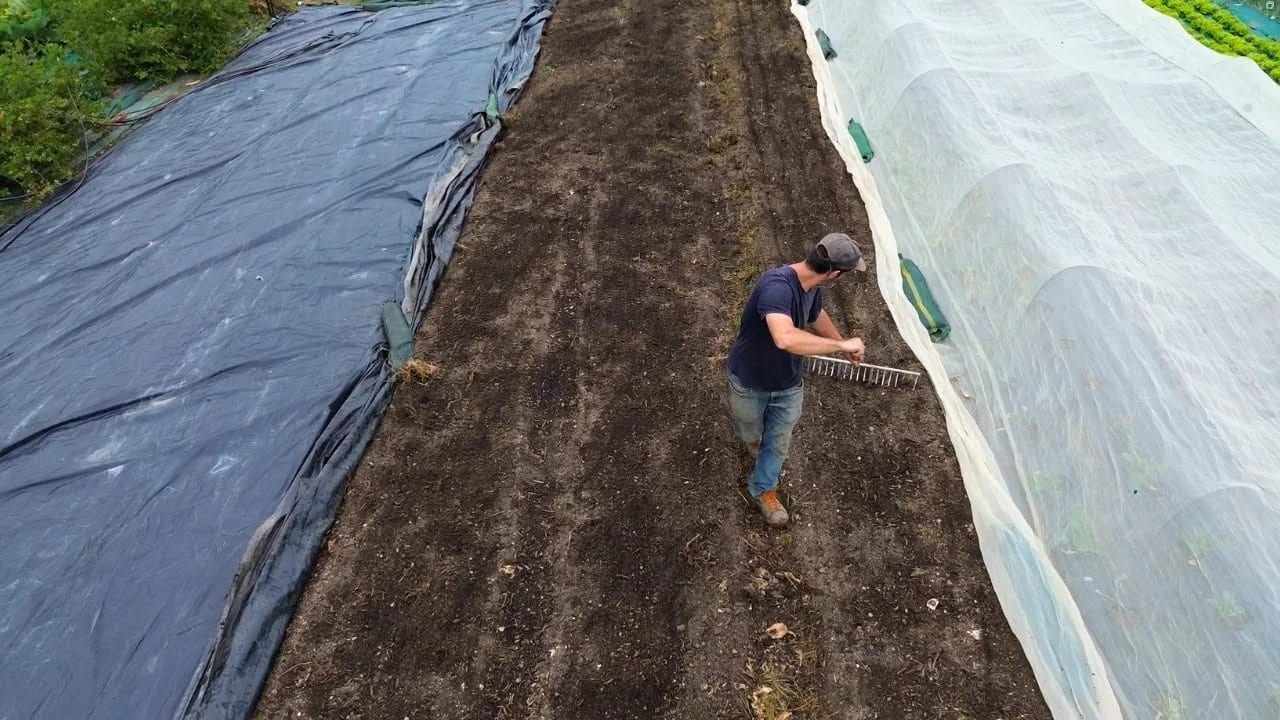
Successful autumn radishes: practical guide and tips
From bed preparation to harvest, every step counts to grow crunchy, healthy and flavorful autumn radishes from September onward.