
How to obtain a fertile market-gardening soil quickly?
Transforming an acidic, waterlogged, depleted soil into a living, well-structured one: a hands-on account of 5 concrete levers to make the transition succeed.


Transforming a waterlogged, acidic soil low in organic matter into a fertile, living and well-structured soil can seem like a major challenge. Yet with simple, reproducible and soil-friendly techniques, a rapid transition is possible. Here is a concrete account, in which a very constrained starting soil was transformed in just a few years into an ideal soil for small-scale market gardening.
An unpromising starting soil
At the outset, the soil was far from ideal for market gardening: silty-sandy and waterlogged, prone to standing water, with strong acidity and very little organic matter.
In other words, an acidic, poor, compact and poorly aerated soil. Nothing optimal for vegetable crops. And yet, in just a few years, this soil underwent a radical transformation.
A living soil at the surface
Today, the surface layer of the soil is completely different: a brown, fine, crumbly layer, a mix of compost and original soil, easily worked with a power harrow. The soil breathes, structured all the way down thanks to galleries, roots and biological activity.
Five essential techniques to accelerate the transition
Here are the five pillars that made it possible to move quickly from a constrained soil to a productive soil.
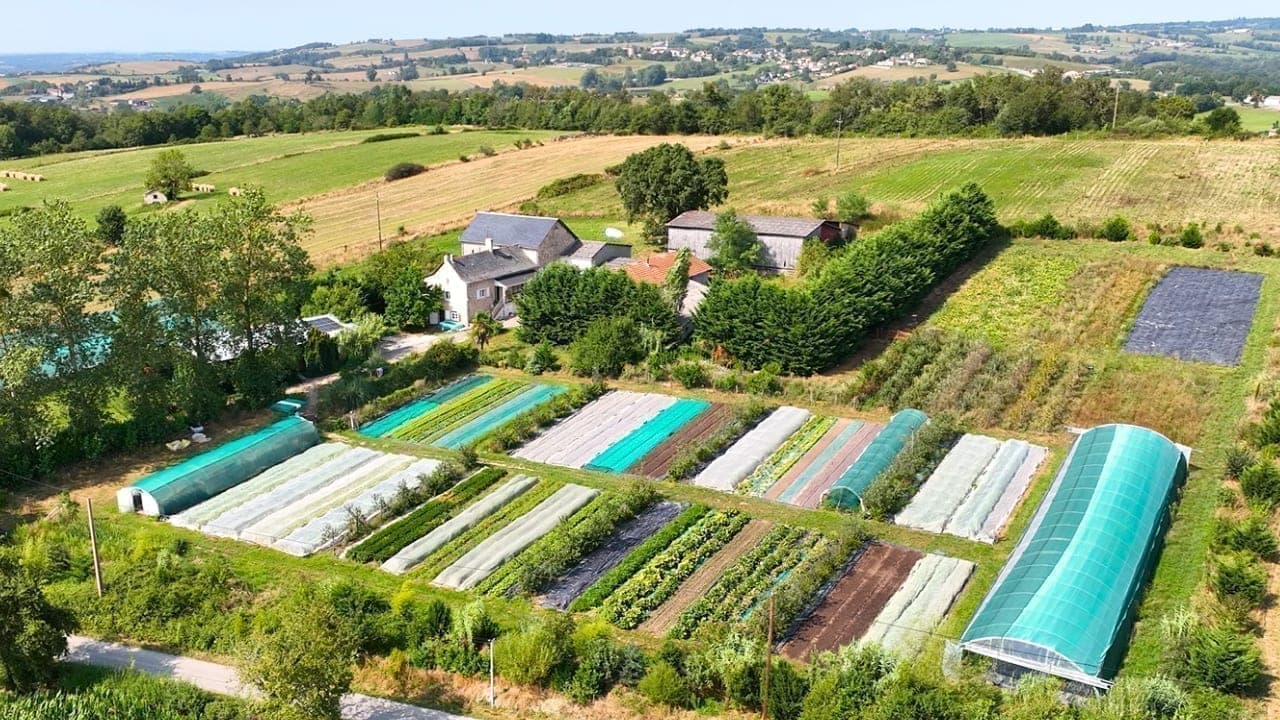
1) Permanent beds
Cultivation areas and walking paths are defined once and for all. No more compaction underfoot, no more deep soil disturbance: underground life takes hold and lasts.
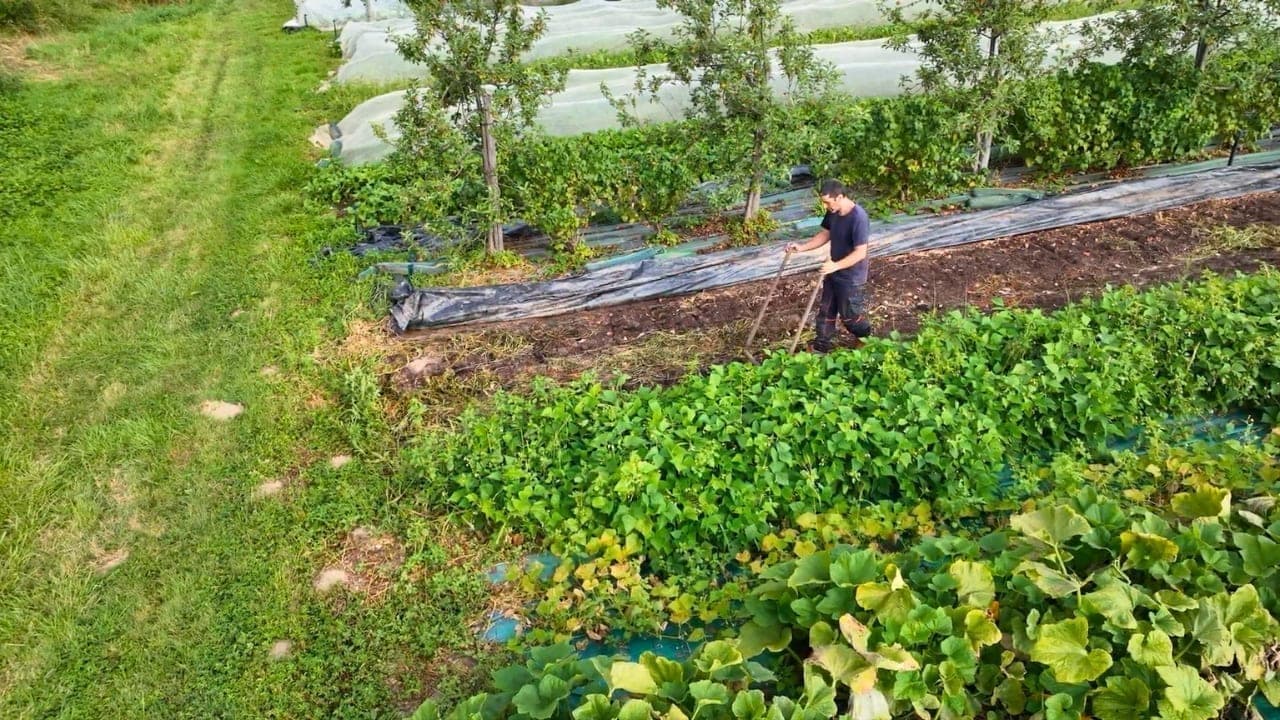
2) Surface tillage
The soil is never turned. A simple pass with a power harrow or rake on the top few centimetres is enough to prepare the seedbed without disturbing the deeper horizons.
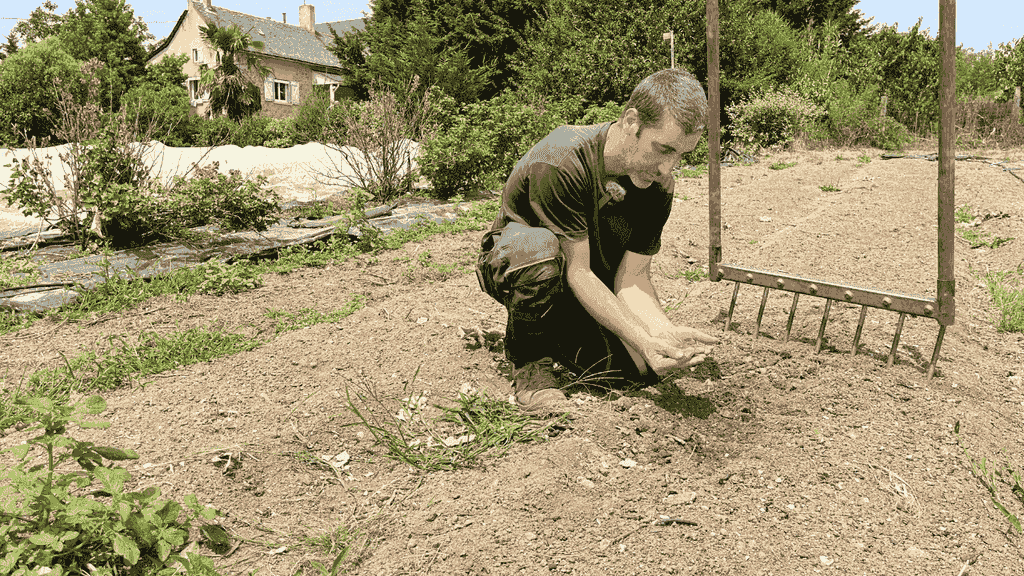
3) Annual decompaction with a broadfork
Once a year, we loosen the soil deeply:
- With a broadfork, down to 20-25 cm.
- Encourages air entry, root descent and water circulation.
- Ideal in spring, without disturbing the underground ecosystem.
4) Generous inputs of organic matter
Mature compost, wood chips, manure: organic matter is added regularly at the surface. It feeds soil life and progressively structures the top few centimetres.
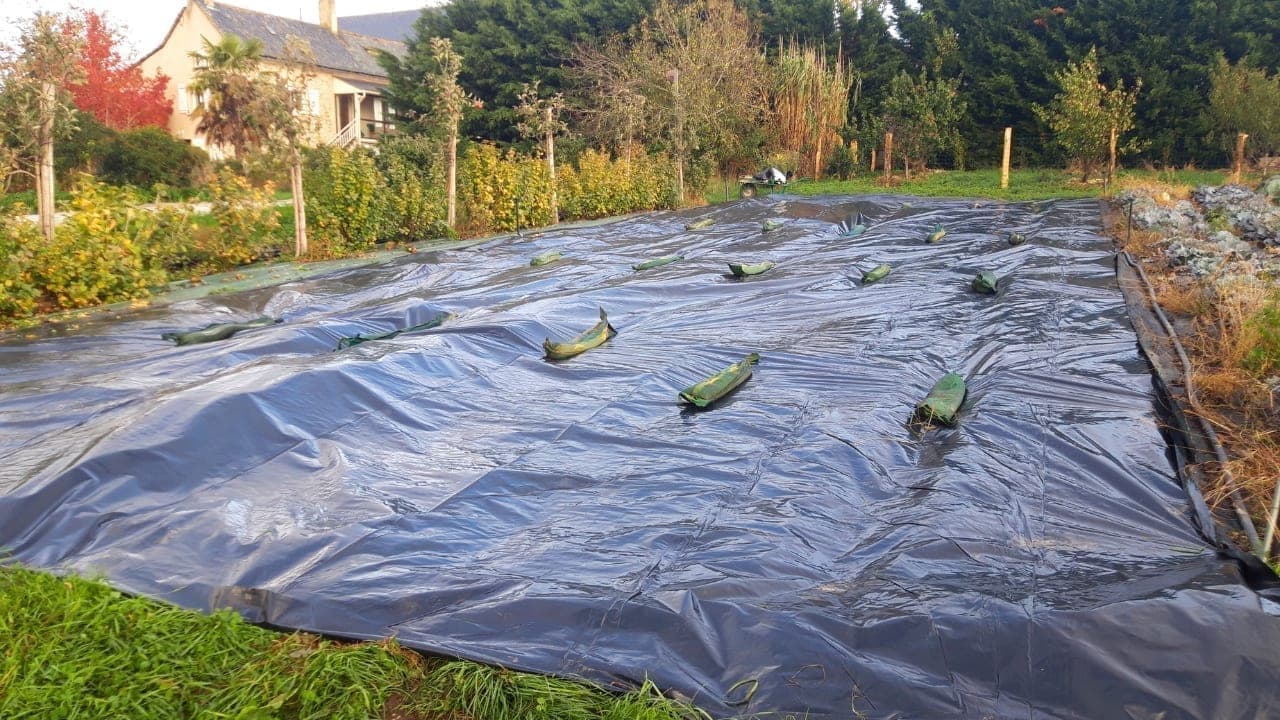
5) Permanent cover
The soil is never bare. Living crops, mulch, green manures: we cover continuously to limit erosion, retain moisture and feed microbial life.
Conclusion: a living soil can be built quickly, if you take care of it
Transforming an acidic, compact and waterlogged soil into a fertile market-gardening soil is not a distant dream. By combining permanent beds, surface tillage, large inputs of organic matter, gentle decompaction and permanent ground cover, you can obtain a rich, living market-gardening soil in just a few seasons.
Soil does not improve through the magic of mechanical work, but through the life sustained within it, the attention given to it and the organic matter brought to it. An accessible, replicable and, above all, effective method.
-
How to choose the ideal location for a thriving micro-farm?
Choosing the location is one of the major success factors for a micro-farm. Here are the criteria to prioritise to build a viable activity.
-

What mistakes should you avoid when starting out in small-scale market gardening?
Starting bio-intensive market gardening on a small surface is an exciting adventure, but full of pitfalls. Many project leaders make the same mistakes.
-
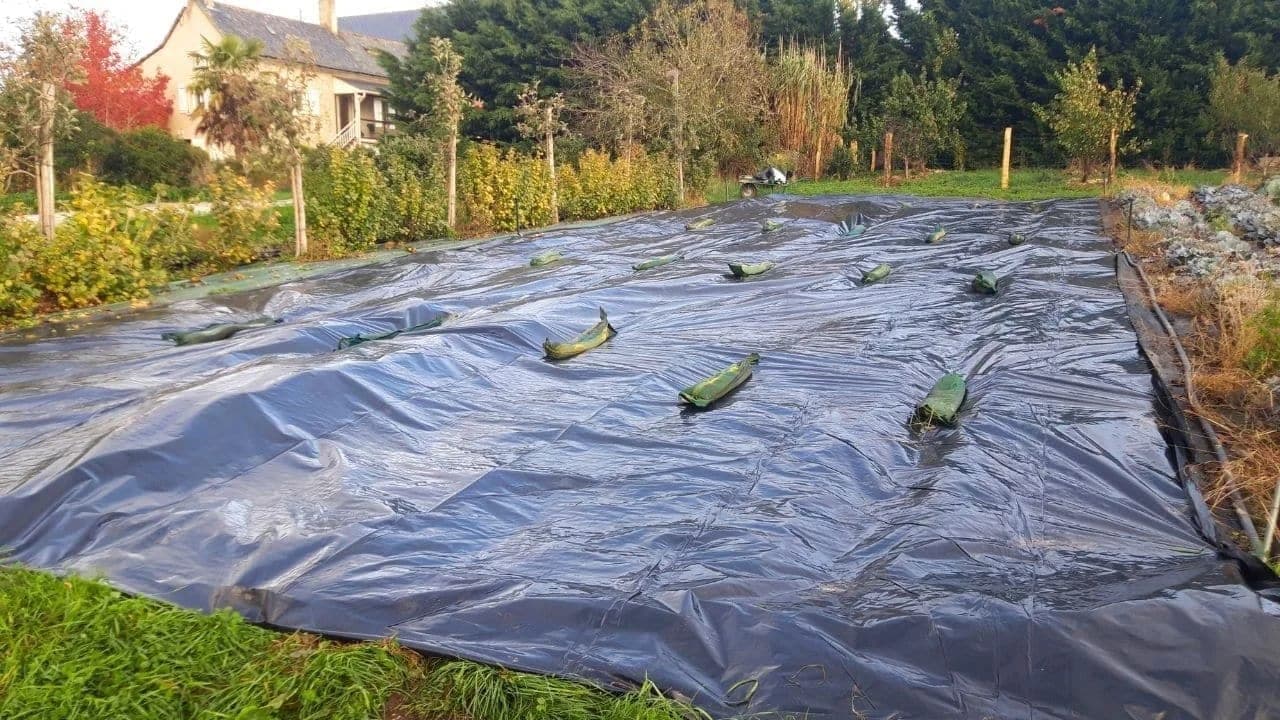
Occultation in market gardening: simple, effective and ultra performant!
Bio-intensive market gardening aims to maximize vegetable production on small surfaces while respecting the principles of organic agriculture. One of the key techniques is occultation.